
Healthy Diet: A Practical Guide to Eating Well
A healthy diet is not about strict rules or giving up every food you enjoy. It’s about choosing a variety of nourishing foods most of the time, in amounts that suit your needs. Eating well can support general health and wellbeing, while making meals enjoyable and sustainable.
What does a healthy diet look like?
The Australian Dietary Guidelines recommend eating a wide variety of nutritious foods from the five food groups:
- Vegetables and legumes or beans: Include a range of colours and types, such as leafy greens, carrots, tomatoes, lentils and chickpeas.
- Fruit: Choose fresh, frozen or canned fruit. Check labels on canned fruit and choose options without added sugar where possible.
- Grain foods, mostly wholegrain or high-fibre: Examples include oats, wholemeal bread, brown rice and wholegrain pasta.
- Lean meats and poultry, fish, eggs, tofu, nuts, seeds and legumes or beans: These foods provide protein and other important nutrients.
- Milk, yoghurt, cheese and alternatives: Choose options that suit your needs. Some plant-based alternatives are fortified with calcium, but not all are nutritionally equivalent to dairy.
Water is also an important everyday drink. Individual fluid needs vary, but water is generally a good choice, particularly in place of sugary drinks.
Build balanced, satisfying meals
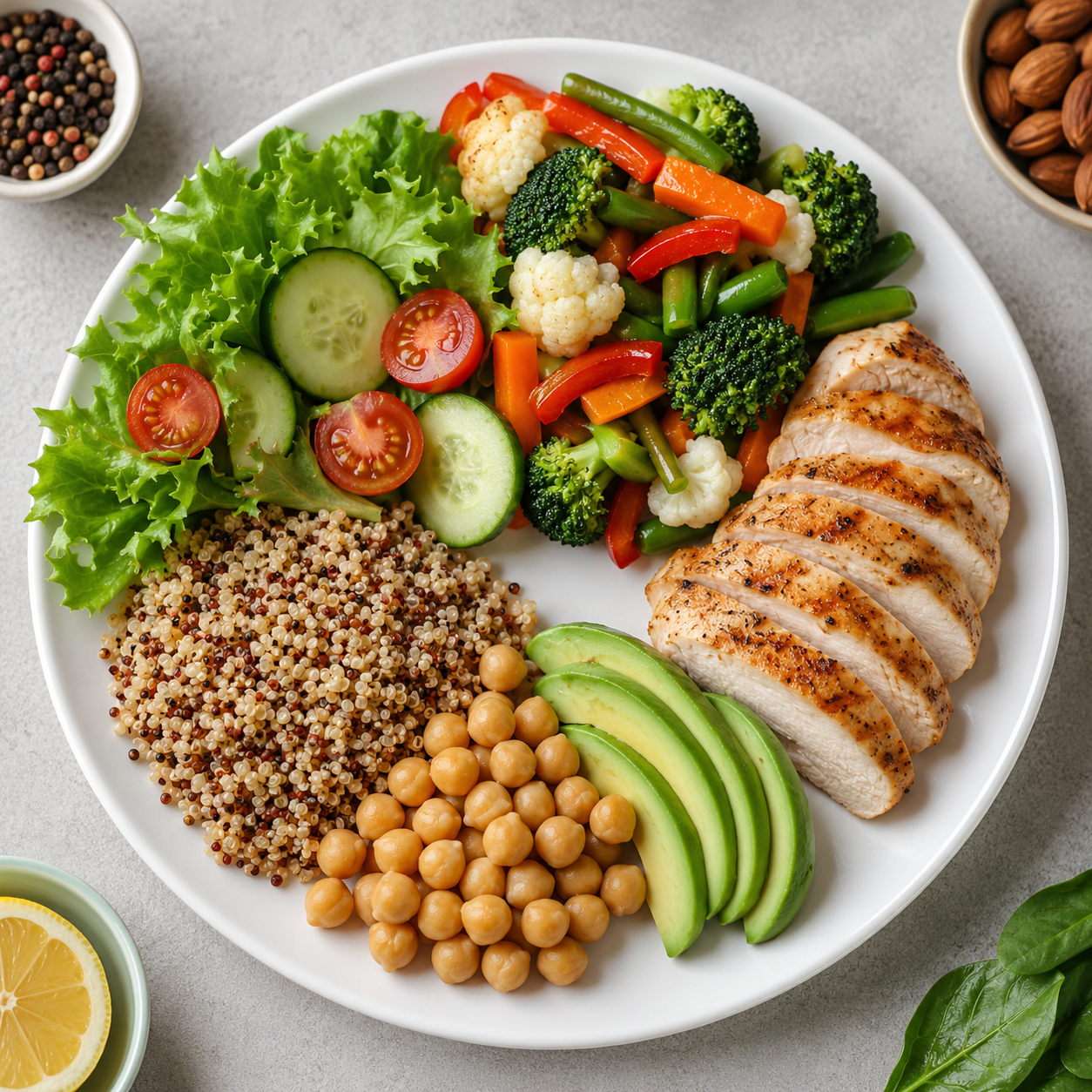
A simple way to plan a meal is to include vegetables or salad, a source of protein, and a wholegrain or other high-fibre carbohydrate. For example, try grilled fish with brown rice and vegetables, or a bean and vegetable curry served with wholemeal roti.
Healthy eating does not require every meal to be perfectly balanced. The overall pattern matters more than any single meal or snack. Foods high in added sugars, salt or saturated fat can still fit occasionally; they simply don’t need to make up most of your diet.
Make healthy eating practical
- Plan a few meals ahead: A short meal plan can make shopping easier and help reduce last-minute choices.
- Keep convenient staples on hand: Frozen vegetables, canned beans, eggs, oats and canned fish can be useful ingredients for quick meals.
- Read food labels: Compare similar products and check serving sizes, sodium, added sugars and saturated fat.
- Eat mindfully: Take time to enjoy meals and notice hunger and fullness cues where possible.
- Allow flexibility: Cultural foods, family meals and favourite treats can all be part of a healthy eating pattern.
Be cautious with restrictive diets
Very restrictive eating plans can be difficult to maintain and may not provide all the nutrients your body needs. Be wary of claims that promise rapid weight loss, “detox” benefits or results from a single food or supplement. If you’re considering a major dietary change, speak with a health professional first.
Different needs call for different advice
Healthy eating looks different for everyone. Age, activity level, health conditions, culture, budget, allergies and personal preferences can all influence food choices. If you have specific nutritional needs or concerns, a GP or an Accredited Practising Dietitian can offer advice tailored to you.
The takeaway
A healthy diet is built on variety, balance and habits you can maintain. Choose nourishing foods from the five food groups, drink water regularly and make room for enjoyment. Small, realistic changes can be easier to sustain than an all-or-nothing approach.
Healthy Eating: 8 Frequently Asked Questions About Diet and Nutrition
- What are the best foods for women’s health?
- What is the healthiest thing to eat on a diet?
- What is the perfect healthy diet?
- What is the meaning of a healthy diet?
- What are the Harvard dietary guidelines for healthy eating?
- What is your healthy diet?
- What is the best weight loss diet in Australia?
- What is the healthiest diet to eat everyday?
What are the best foods for women’s health?
There’s no single “best” food for women’s health, but a varied diet can help meet changing nutritional needs throughout life. Include plenty of vegetables, fruit, wholegrains, legumes, nuts and seeds, along with protein-rich foods such as eggs, fish, tofu or lean meat. Calcium-rich foods—such as dairy products or calcium-fortified alternatives—support bone health, while iron-rich choices like legumes, lean meat and leafy greens can be particularly important for people who menstruate. Needs differ between individuals and life stages, so a GP or Accredited Practising Dietitian can provide personalised advice.
What is the healthiest thing to eat on a diet?
There’s no single “healthiest” food to eat when you’re on a diet; a varied, balanced eating pattern is more helpful than relying on one food. Build meals around vegetables, fruit, wholegrain foods and a source of protein, such as beans, eggs, fish, tofu or lean meat, and choose water as your main drink. The best choices are nutritious, satisfying and realistic for your needs and lifestyle.
What is the perfect healthy diet?
There’s no single “perfect” healthy diet that suits everyone. A balanced way of eating generally includes a variety of vegetables, fruit, wholegrain foods, protein-rich foods and dairy or suitable alternatives, with water as the main drink. The best approach is one that meets your nutritional needs, fits your culture, budget and preferences, and is realistic to maintain. For advice tailored to your health or circumstances, speak with a GP or an Accredited Practising Dietitian.
What is the meaning of a healthy diet?
A healthy diet means eating a varied, balanced range of foods that provides the nutrients your body needs to support health and wellbeing. It generally includes plenty of vegetables, fruit, wholegrain foods, lean protein sources and suitable dairy or fortified alternatives, along with water. It also allows for flexibility and enjoyment, rather than relying on strict rules or avoiding entire food groups without medical advice.
What are the Harvard dietary guidelines for healthy eating?
Harvard’s Healthy Eating Plate recommends filling half your plate with vegetables and fruit, a quarter with whole grains and a quarter with healthy protein, such as fish, poultry, beans or nuts. Choose healthy plant oils, drink water, tea or coffee with little or no added sugar, and limit sugary drinks, refined grains and processed or red meats. It also encourages regular physical activity. These are general guidelines rather than a personalised diet, so individual needs may differ.
What is your healthy diet?
A healthy diet includes a variety of foods from the five food groups: vegetables and legumes, fruit, wholegrain foods, protein-rich foods, and milk, yoghurt, cheese or suitable alternatives. It also means drinking water regularly and limiting foods high in added sugar, salt and saturated fat. There’s no single diet that suits everyone, so aim for balanced, enjoyable choices that fit your needs and lifestyle.
What is the best weight loss diet in Australia?
There’s no single “best” weight loss diet in Australia. The most suitable approach is one that supports gradual, sustainable changes and includes a variety of nutritious foods—such as vegetables, fruit, wholegrains and protein-rich foods—while fitting your health needs, budget, culture and lifestyle. Be cautious of diets promising rapid results or requiring extreme restrictions. For personalised advice, speak with your GP or an Accredited Practising Dietitian.
What is the healthiest diet to eat everyday?
There’s no single diet that’s healthiest for everyone, but a good everyday pattern includes a variety of vegetables, fruit, wholegrain foods, legumes, nuts, lean protein and dairy or suitable alternatives, with water as your main drink. Choose mostly minimally processed foods and limit foods high in added sugar, salt and saturated fat. The best approach is one that meets your nutritional needs, suits your culture and budget, and is enjoyable enough to maintain; a GP or Accredited Practising Dietitian can offer personalised advice.